
From Digital Tool to Industrial Engine
The dental 3D printing market is the segment of additive manufacturing that uses digital scans and specialized printers to fabricate dental models, restorations, and surgical tools directly from biocompatible materials with high precision, replacing or augmenting conventional milling and casting workflows in clinics, laboratories, and training institutions.
The headline story is not adoption; it is scale. The global dental 3D printing market is forecast to surge from US$ 4.85 billion (approx. ₱272.6 billion) in 2024 to US$ 56.37 billion (approx. ₱3.17 trillion) by 2034, a more than tenfold leap at a 27.8% CAGR. That is not incremental digitization; it is an industrial shift. Dental laboratories and clinics already account for 55.6% of market share, and their growing reliance on 3D printing to deliver high‑quality restorations with better fit and functionality shows where this is heading. In practice, 3D printing is becoming the default engine behind crowns, bridges, aligners, dentures, implants, and especially surgical guide manufacturing, not a side experiment for tech‑forward practices.
Biocompatible Resin Printing as the Real Growth Catalyst
Behind the market numbers sits a clear technical driver: biocompatible resin printing. Dental 3D printing starts with an intraoral scan or digital impression, which is turned into a CAD model and produced layer by layer using biocompatible materials. This workflow is only viable at scale because photopolymer resins have matured into a dependable industrial material set. Photopolymers already hold the largest material share at 41.9%, thanks to their precision, smooth surfaces, and aesthetic properties.
The dominance of vat photopolymerization, with 51.3% of the technology share, underlines that the market is betting on resin‑based systems to deliver the accuracy needed for aligners, crowns, and surgical guides. Biocompatible resin printing is not about making prototypes; it is about making permanent, patient‑specific parts with reliable repeatability. As resin formulations improve translucency, strength, and polishability, they cut post‑processing steps and support same‑day dentistry, tightening the feedback loop between digital design and chairside delivery. In short, materials chemistry—not printers alone—is what unlocks sustainable additive manufacturing growth in dentistry.
Volume Production and the Industrialization of Dental Workflows
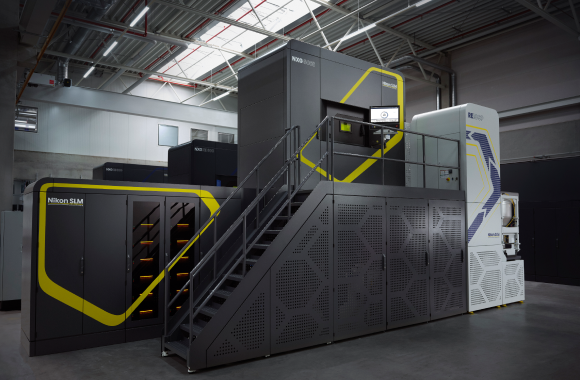
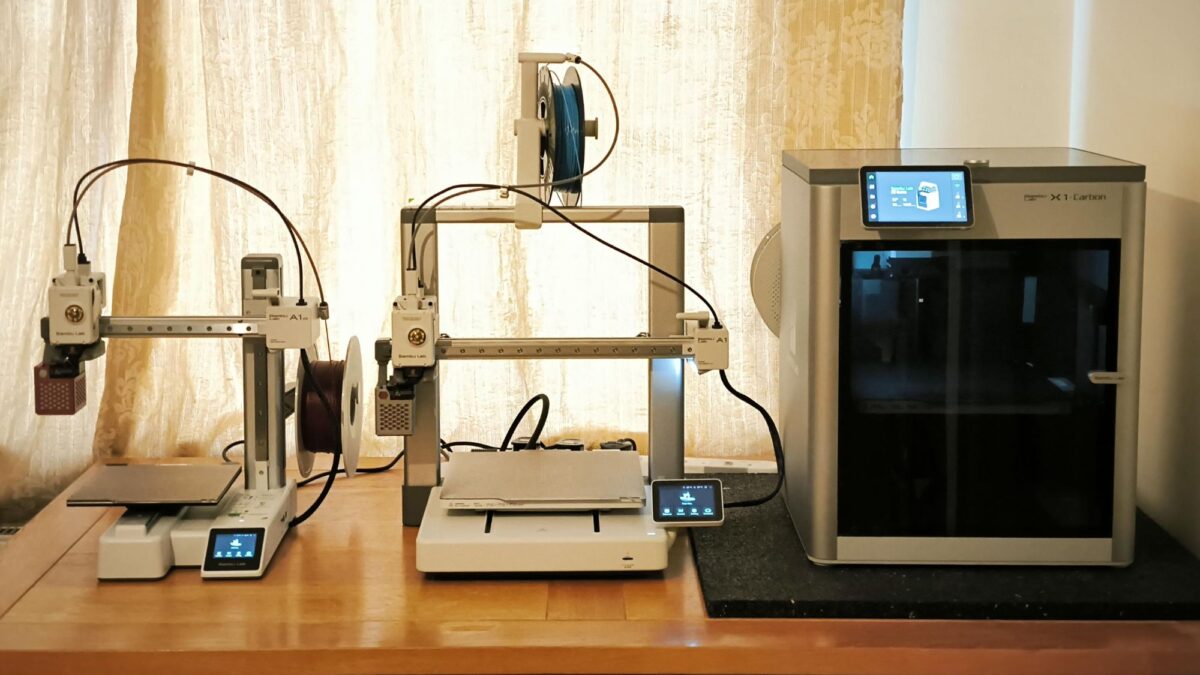
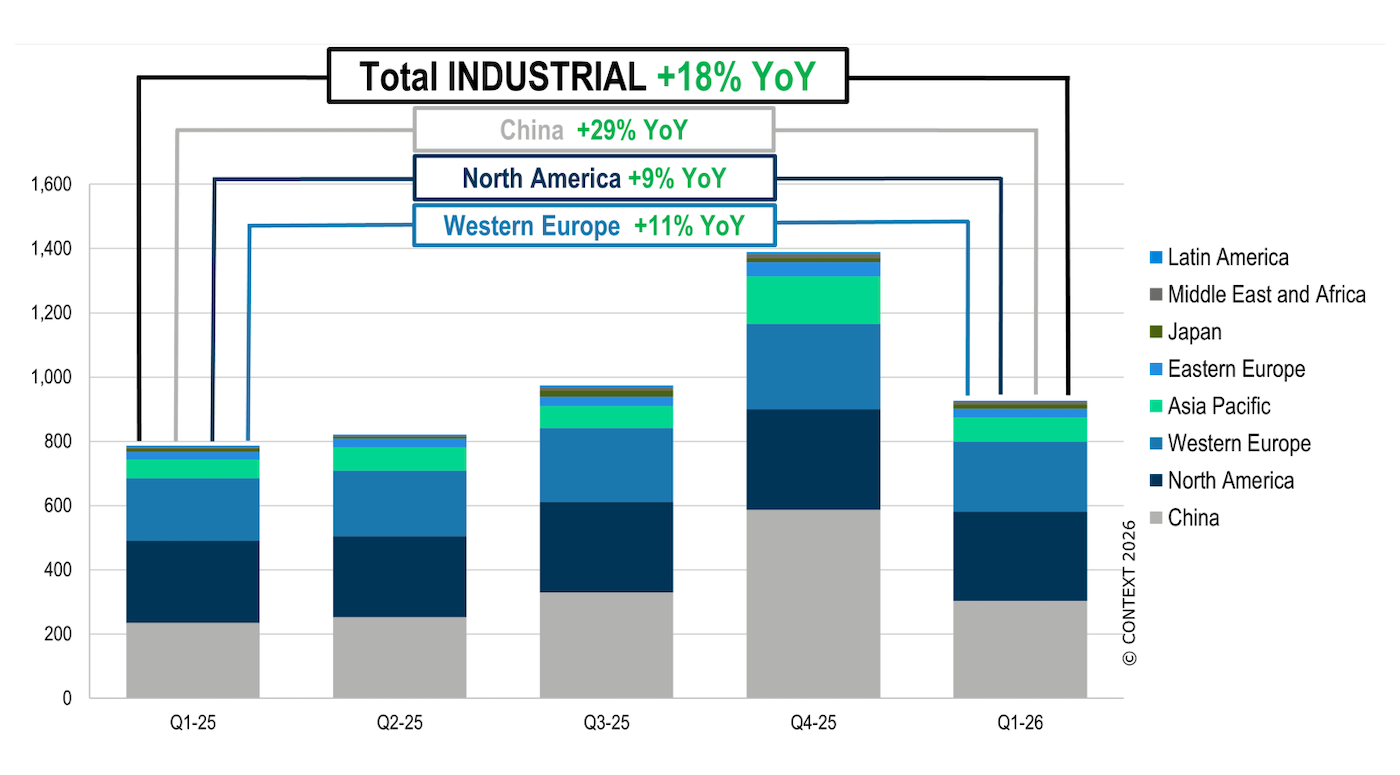
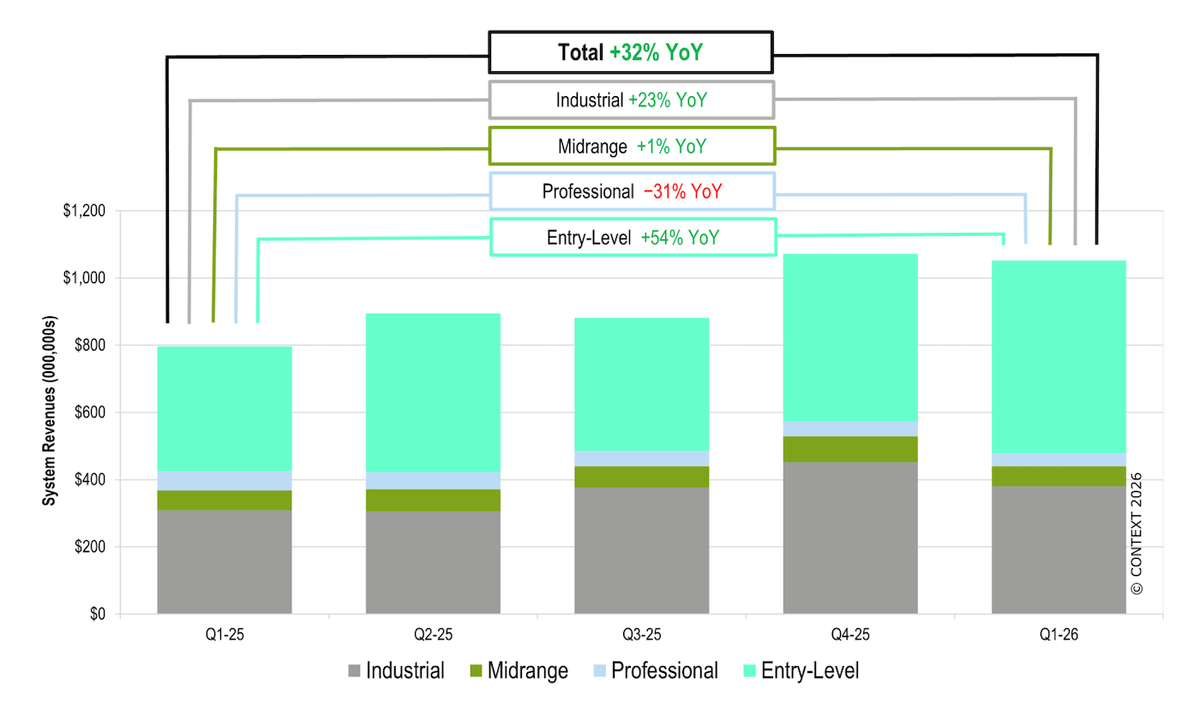
The most important signal for investors and dental leaders is that additive manufacturing is no longer confined to prototyping. Global 3D printing hardware revenues grew 32% year‑on‑year in early 2026, driven mainly by entry‑level systems priced below US$ 2,500 (approx. ₱140,000) and industrial printers above US$ 100,000 (approx. ₱5.6 million). Industrial systems recorded their third consecutive quarter of growth after two years of declines, which analysts highlight as proof of deeper integration into volume production.
Dental is riding this industrial wave. Industrial polymer system shipments are surging, and in dentistry that translates into printers running continuous queues of crowns, bridges, aligners, and surgical guides instead of single bespoke jobs. Clinics increasingly produce customized restorations in‑house, reducing dependence on external labs and shortening treatment times. This shift changes the economics of care: capital‑intensive hardware is offset by high throughput, while standardized digital workflows make results more consistent across operators. The message is clear: the market now trusts dental 3D printing as production infrastructure, not a gadget.
Who Wins—and Who Risks Falling Behind
The main winners of this transformation are the organizations that can convert digital capability into manufacturing discipline. Dental laboratories and clinics, already the largest end‑user segment at 55.6%, use 3D printing to streamline production and deliver restorations with improved fit and functionality. Educational institutions gain from realistic printed models that raise the standard of hands‑on training. Orthodontics, holding 39.9% of applications, benefits from precise, repeatable aligner and model production that would be far slower with traditional methods.
But the broader additive market shows how uneven this transition can be. Midrange systems priced between US$ 20,000 and US$ 100,000 (approx. ₱1.12–₱5.6 million) and professional printers between US$ 2,500 and US$ 20,000 (approx. ₱140,000–₱1.12 million) saw shipment declines of 6% and 22%, pressured by low‑cost extrusion machines from aggressive consumer‑level brands. At the same time, vendors face uncertainty from global conflicts, inflation concerns, higher interest rates, and slower economic conditions in key regions. Dental players that stay locked into mid‑performance systems or delay digital adoption risk being stranded between commodity hardware and industrial‑grade platforms.
Conclusion: Dental 3D Printing Is Becoming the Default, Not the Future
A market that grows from US$ 4.85 billion (approx. ₱272.6 billion) to US$ 56.37 billion (approx. ₱3.17 trillion) in a decade does not describe a niche; it describes a new normal. Dental 3D printing is moving from experimental to expected, powered by biocompatible resin printing, high‑accuracy vat photopolymerization, and a clear trend toward volume production of functional parts.
The strategic question is no longer whether to adopt dental 3D printing, but how aggressively to industrialize it. Laboratories and clinics that rethink themselves as digital manufacturers—standardizing scans, CAD, materials, and quality control—will ride the additive manufacturing growth curve and shape what “standard of care” means in restorative and orthodontic treatment. Those that hesitate will soon find that the market has moved on, and that patients and partners expect the speed, precision, and customization that only mature dental 3D printing workflows can deliver.