
A Definition-Driven Shift: Aluminum AM Moves From Safe Choice to Smart Choice
The EOS Constellium partnership is a strategic agreement to expand aluminum additive manufacturing by combining EOS’s industrial metal printing platforms with Constellium’s advanced aluminum alloys, rebranding and extending existing 3D printing materials while creating a long‑term framework for next‑generation alloys that arrive with validated process parameters, industrial application guidance, and a clear path from development to production use. The headline takeaway is simple: aluminum in additive manufacturing is growing up. EOS has entered an agreement with Constellium that adds a new alloy and relaunches an existing one under a shared brand, positioning aluminum not as a compromise material but as a serious production option for heat‑critical and structural components. In metal AM, where AlSi10Mg has dominated because it resists cracking rather than because it excels mechanically, EOS is choosing to fix the material bottleneck instead of asking customers to keep engineering around it.
Inside the EOS Constellium Partnership: Rebranding With Real Substance
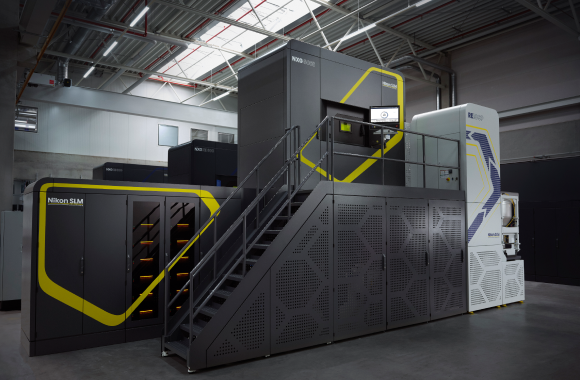
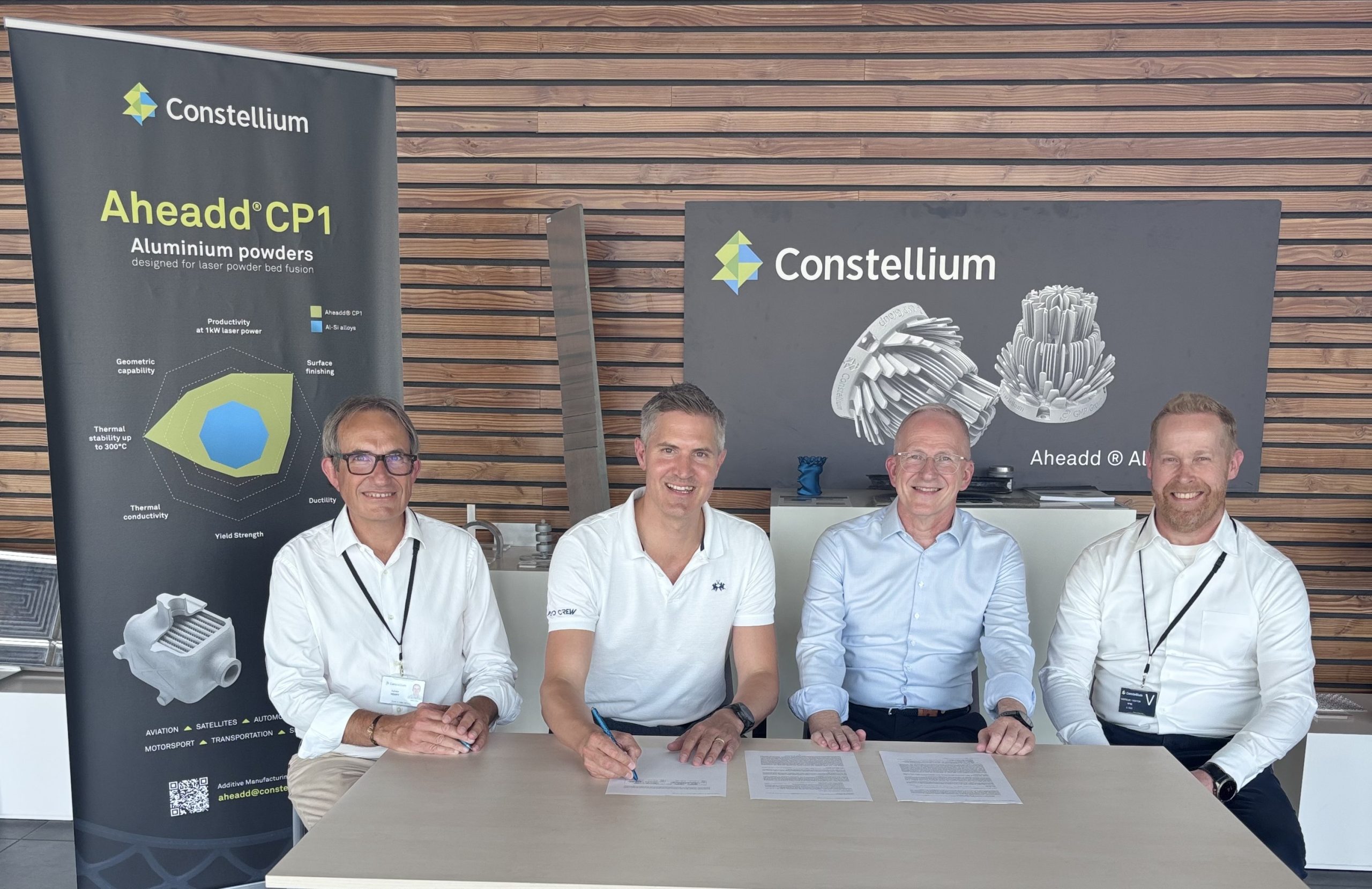
At the center of this move is a two‑way material exchange dressed up as a rebrand—but it amounts to a deeper integration of industrial metal printing and alloy design. EOS will bring Constellium’s Aheadd CP1 alloy into its catalog as EOS Aluminium Constellium CP1, while its own Al5X1 becomes EOS Aluminium Constellium Al5X1 and joins Constellium’s alloy portfolio. On paper, that is a naming exercise; in practice, it aligns process recipes, data, and market messaging across printer OEM and alloy developer. The collaboration is explicitly framed as a long‑term effort to develop additional aluminum 3D printing materials, pairing EOS’s work on laser powder bed fusion systems with Constellium’s alloy engineering. As Ludovic Piquier put it, this is a way to “bring next‑generation aluminium alloys into industrial additive manufacturing at scale,” and to “unlock new high‑performance applications for customers worldwide.” That is the right ambition: hardware alone has never been enough to make AM production‑ready.
What CP1 and Al5X1 Mean for Production Users
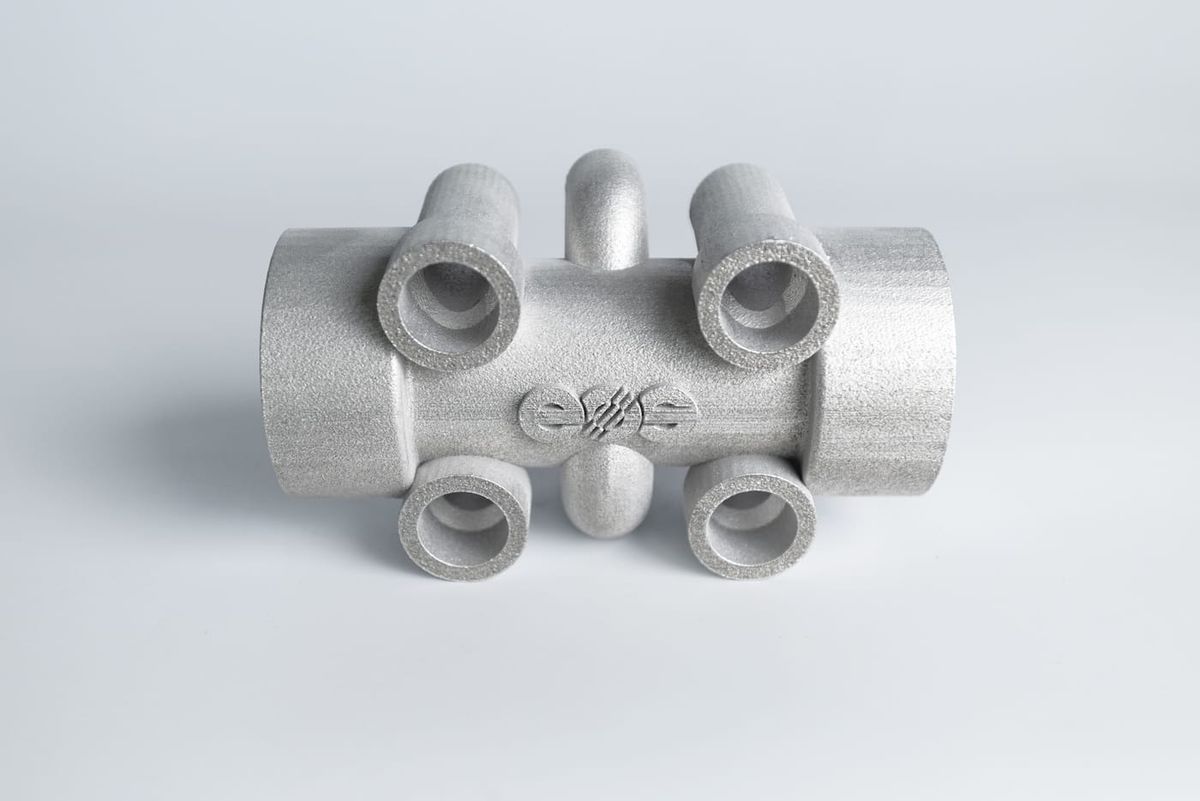
For ordinary users running EOS or AMCM systems, the real impact is about capability and time‑to‑qualification, not brand names. EOS Aluminium Constellium CP1 is positioned as a next‑generation alternative to the default AlSi10Mg, with higher strength and good elongation, heat treatment that skips quenching, and stable processing at high laser power because it avoids volatile elements like magnesium and zinc. It is corrosion‑resistant, conductive, and suitable for anodizing and electrochemical polishing, making it attractive for heat exchangers, semiconductor heat sinks and wafers, and lightweight structural parts under moderate load. EOS Aluminium Constellium Al5X1 remains the high‑strength, high‑elongation, anodisable option aimed at aerospace, transportation, and motorsport where demanding mechanical requirements and surface finishing come together. Crucially, both alloys come with validated process parameters for EOS and AMCM machines, so customers get industrial 3D printing materials that are much closer to ready for production instead of starting from a blank qualification slate.
Why This Happens Now: Fixing the Aluminum Bottleneck in Metal AM
The timing of the EOS Constellium partnership is no accident. Metal AM has long been constrained by aluminum options that favor crack resistance over performance, with AlSi10Mg holding default status mainly because it is safe to process, not because it delivers the best mechanical behavior. As industrial users push for higher‑performance thermal management, lighter structures, and more demanding environments, this compromise has become harder to justify. By partnering instead of building alloy expertise alone, EOS is acknowledging that industrial metal printing needs specialized materials science as much as it needs better machines. Constellium’s CP1 has already been serious enough to warrant separate characterization work for thermal management and heat exchangers with backing from defense manufacturing programs, which shows there is validated demand for such alloys beyond marketing claims. EOS is now pulling that work into its ecosystem, and the companies explicitly describe the deal as the basis for a longer‑term effort to develop additional aluminum alloys for additive manufacturing.
Looking Ahead: From Two Alloys to a Broader Aluminum AM Platform
The most important part of this story is what comes next. EOS Aluminium Constellium CP1 is set for release in August 2026, but both companies are clear that the agreement extends far beyond CP1 and Al5X1. They describe it as a long‑term framework for next‑generation aluminum alloys, with EOS contributing process and hardware knowledge and Constellium driving alloy design. If this framework works, aluminum additive manufacturing will gain a pipeline of 3D printing materials that arrive with tuned parameters, application notes, and a defined industrialization path. That directly addresses the practical pain point for users: qualifying new alloys is slow and expensive, and many have stayed stuck on AlSi10Mg as a result. Joachim Zettler summed up the ambition plainly, saying that with CP1, Al5X1, and the EOS Constellium partnership, the companies are “setting a new benchmark for aluminium in additive manufacturing” and enabling “higher performance, greater productivity, and faster industrial adoption.” The benchmark to watch now is whether more real production parts follow.