
Wire-LMD 3D Printing: From Welding Trick to Exhaust Game-Changer
Wire-LMD 3D printing is a metal additive manufacturing process that uses a laser to melt metal wire with welding-like precision, enabling manufacturers to build complex, customized automotive exhaust components directly from digital designs, with internal geometries and material quality that traditional forming or cutting methods cannot match. This technology matters because exhaust systems sit at the intersection of performance, acoustics, packaging and heat management, yet most fabrication shops are stuck with tools optimised for mass production, not one-off dream cars. The core problem in automotive exhaust manufacturing is no longer whether we can bend pipes; it is whether we can sculpt flow paths and sound signatures without drowning in cost and lead time. Producing highly specialized automotive components via traditional subtractive or forming methods introduces significant financial and temporal bottlenecks. Symmetrical, highly specific shapes demand special tooling, and the financial burden of this conventional approach is substantial. Wire-LMD flips that logic: geometry becomes cheap, iteration becomes routine, and low-volume projects suddenly make economic sense.
Ferrita’s SLR McLaren: A One-Week Proving Ground for Wire-Based AM
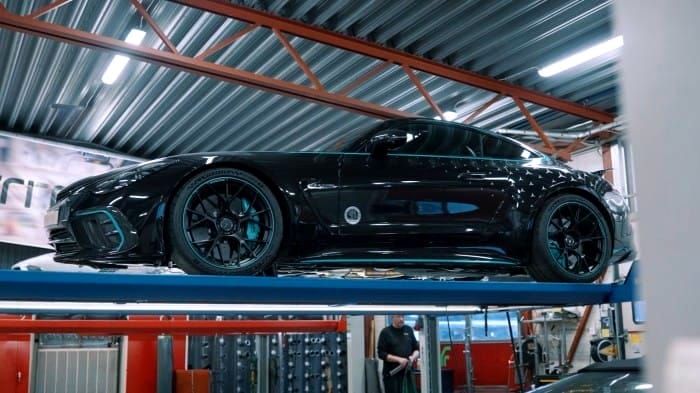
Ferrita Sweden AB develops and manufactures advanced technical solutions in sound attenuation, vibration, thermal insulation and exhaust gas purification, including catalyst and particle filter systems. This expertise, combined with a culture that values unique project cars, allows the team to be highly creative with exhaust design. When a customer brought in a 2003 Mercedes Benz SLR McLaren and wanted to make the vehicle completely special, Ferrita faced a perfect storm of constraints: severe packaging limits inside the front fender, a heavy original muffler around 20 kilograms, demanding fluid dynamics, and a hard one-week deadline for the entire job. According to CEO Micael Ljungström, “After incorporating Meltio’s technology at Ferrita we have achieved a 50% time and cost reduction”. That is not a marketing sound bite; it is a blunt verdict on the old way of doing things. Ferrita usually only has the customer’s car in the shop for about a week, so spending weeks and extensive budgets on custom tooling was never an option. Wire-LMD 3D printing turned an almost impossible brief into a viable, profitable project.
Precision Customization: Geometry, Acoustics and Material in One Workflow
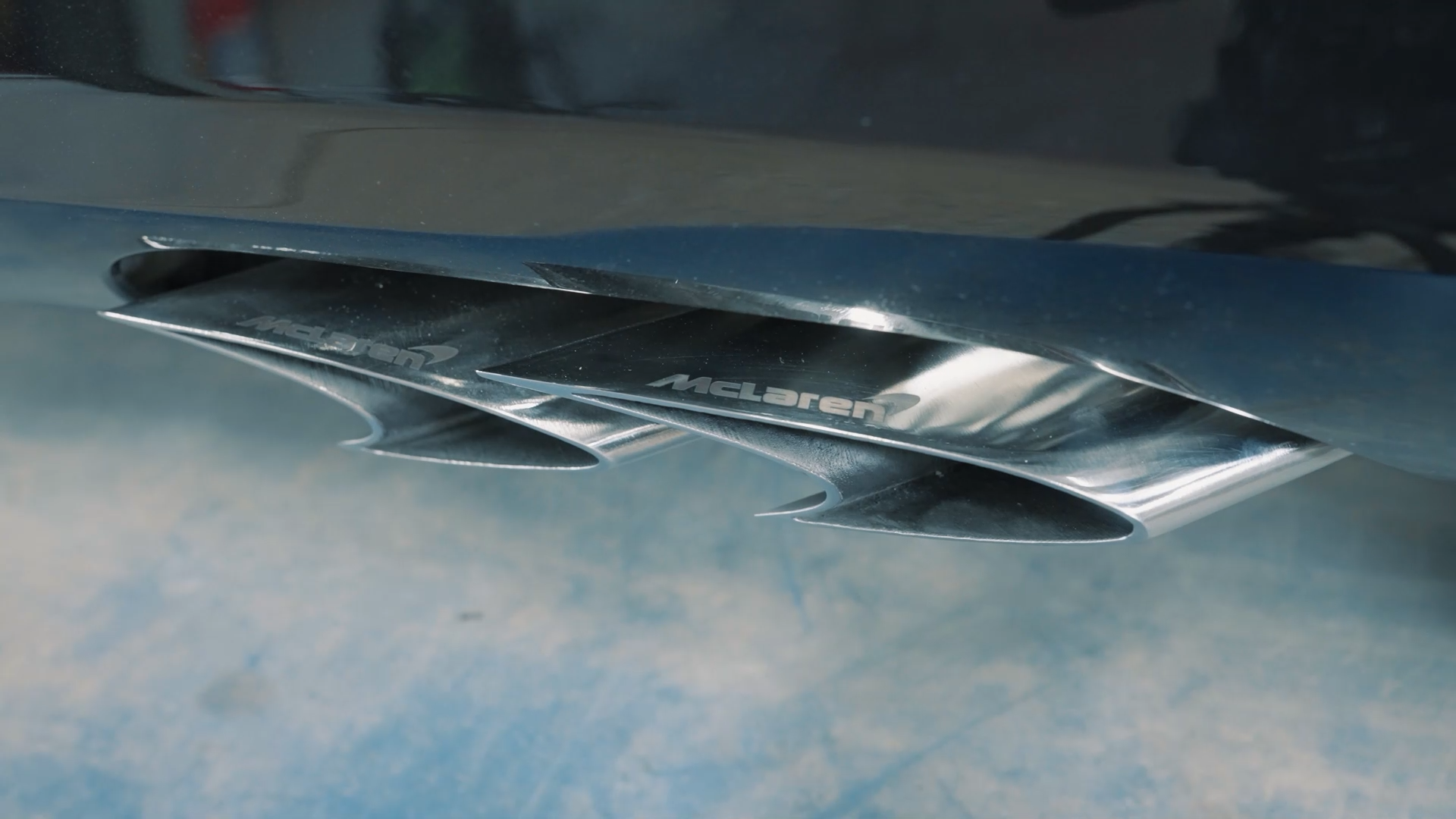
The SLR McLaren exhaust forced Ferrita to confront everything traditional fabrication struggles with. They needed to manufacture four precisely symmetrical tailpipes with a highly specific shape, perfectly matching the existing lines of the vehicle while fitting an entire exhaust system in a tight front fender space. On top of that, they had to replace the heavy muffler to cut weight and reduce excess heat. This is where wire-LMD 3D printing stops being a novelty and becomes an engineering weapon. Creating an ideal exhaust note requires precise manipulation of pipe dimensions, volumes, frequency changes and exhaust velocity. Hand-producing merge pipes with round ends cannot deliver flawless internal geometries; as Ferrita’s technician Viktor notes, “You can’t hand-produce a pair of merge pipes with round ends, flow-wise. You can make perfect merge pipes”. Wire-based additive manufacturing allows those perfect internals to be designed and built directly, reducing back pressure while meeting packaging, acoustic and thermal targets. The tailpipes were manufactured out of 316 stainless steel using a Meltio Robot Cell at 10 millimeters per second, 15 liters per minute gas flow and 1000 watts laser power to ensure fine detail resolution. This is precision customization, not pipe bending.
Rapid Prototyping and Low-Volume Production Without the Tooling Tax
Ferrita’s approach makes a clear argument: if you are still building custom exhausts around tooling, you are fighting the wrong battle. Traditionally, achieving symmetry and complex shapes would require the shop to create special tooling, and the financial burden of this conventional approach is substantial. Wire-based additive manufacturing, by contrast, thrives on low-volume, high-value components. Ferrita deployed an end-to-end digital and physical pipeline. They started by scanning the bottom plate to visualise the space available, then built a digital concept model to test fitment for valves and pipes. Before using any metal, they printed a rapid plastic prototype in just a few hours to guarantee the design matched the car’s lines. Only once the design was proven did they move to wire-LMD for the final 316 stainless steel tailpipes in the Meltio Robot Cell. Ferrita usually only has the customer’s car in the shop for about a week, so this rapid additive workflow is not a bonus; it is the difference between saying yes or no to ambitious projects. In automotive exhaust manufacturing, that agility is a competitive advantage, not an indulgence.
Application-First Innovation: Why Wire-LMD Is Here to Stay
The most telling part of Ferrita’s story is their development philosophy. They did not adopt wire-LMD 3D printing to tick a technology box; they adopted it to solve real manufacturing pain. “To be internationally competitive, we entrusted Meltio and its 3D printing technology for the repair of our pieces, which helps automate the welding and repair process”. That is an application-first mindset: start with the bottleneck, then adapt WAAM-style and wire-LMD systems to remove it. They use Meltio DED wire-laser metal 3D printing industrial solutions adapted for the automotive sector, integrating scanning, CAD, rapid prototyping and LMD into one workflow. By combining creative engineering with a rapid additive workflow, Ferrita can deliver highly unique automotive projects faster than ever before. The lesson for the wider industry is blunt. Wire-LMD is not a niche tool for exotic cars; it is a blueprint for how exhaust manufacturers, aftermarket shops and performance engineers can turn complexity into a business model. Those who treat additive manufacturing customization as central rather than experimental will set the pace for the next generation of automotive exhaust manufacturing.