
Aluminum Additive Manufacturing Finally Grows Up
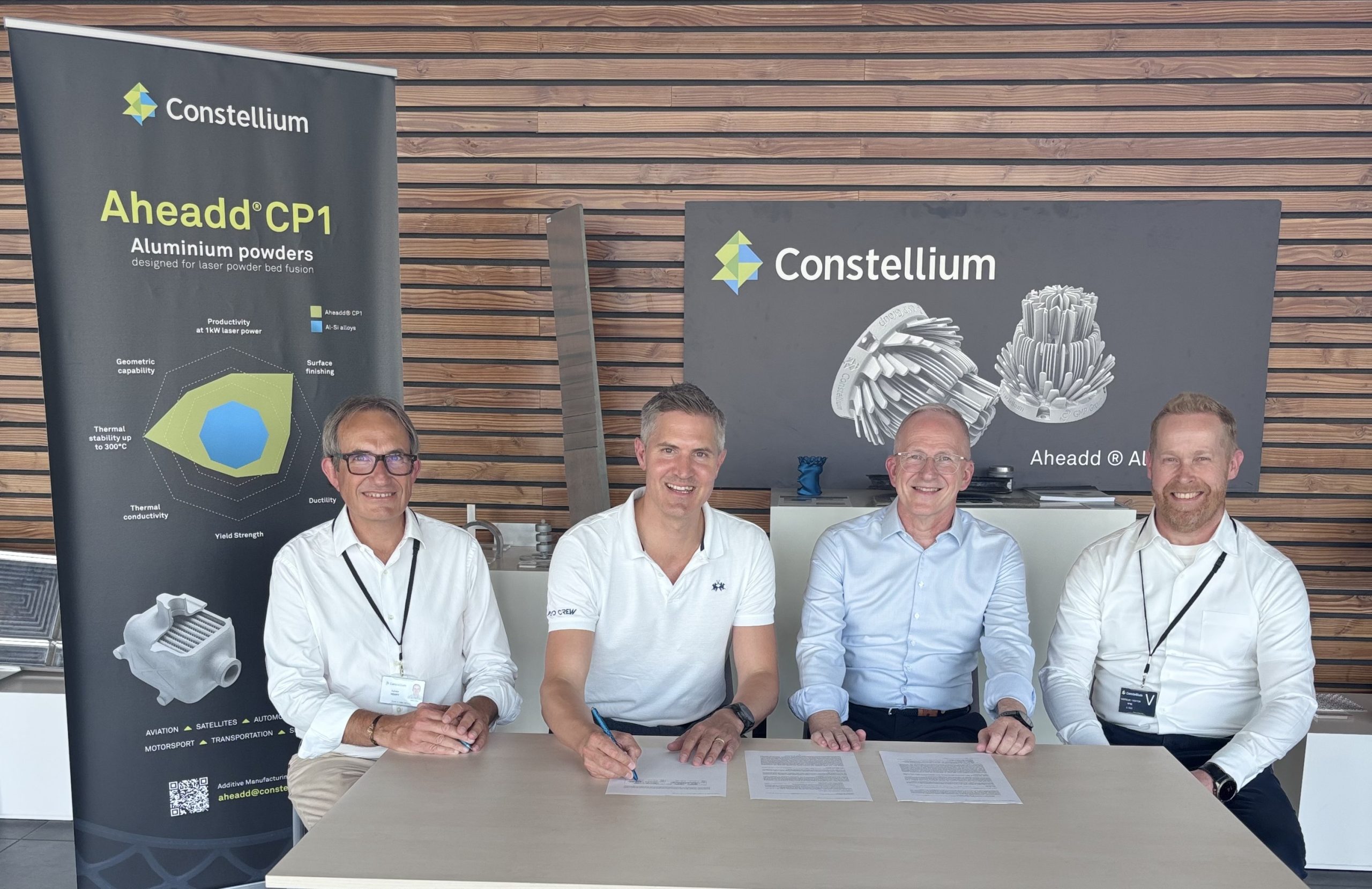
Aluminum additive manufacturing is the use of industrial metal 3D printing processes, such as laser powder bed fusion, to produce functional aluminum components with tailored properties for demanding applications in aerospace, automotive, thermal management, and general industry at production volumes rather than only for prototypes. EOS’ new partnership with Constellium signals that aluminum in 3D printing metal alloys has moved beyond the era of one-size-fits-all AlSi10Mg. EOS is adding Constellium’s Aheadd CP1 alloy to its materials portfolio as EOS Aluminium Constellium CP1 and rebranding its award-winning Al5X1 as EOS Aluminium Constellium Al5X1, which also joins Constellium’s catalog. This is not a cosmetic renaming exercise. It is a direct play for industrial metal printing at scale, with materials designed for production, validated process parameters, and clear targets across aerospace components 3D printing, transportation, and thermal management.
Why CP1 and Al5X1 Matter More Than Another Material Launch
For years, AlSi10Mg has dominated aluminum additive manufacturing mainly because it resists cracking, not because it delivers the best mechanical performance. That compromise has limited how far engineers could push aluminum in industrial metal printing. CP1 and Al5X1 are designed to close this gap. EOS Aluminium Constellium CP1 is positioned as a drop-in alternative to AlSi10Mg with higher strength, good elongation, and simplified heat treatment that skips quenching, while staying stable at high laser power thanks to the absence of volatile elements like magnesium and zinc. EOS Aluminium Constellium Al5X1, meanwhile, targets demanding aerospace, transportation, and motorsport parts with a high-strength, high-elongation, anodizable profile and one-step, non-quenching heat treatment delivering 400 MPa and elongation above 13% after heat treatment. In plain terms: these alloys finally treat 3D-printed aluminum as a structural, certifiable material family, not a compromise.
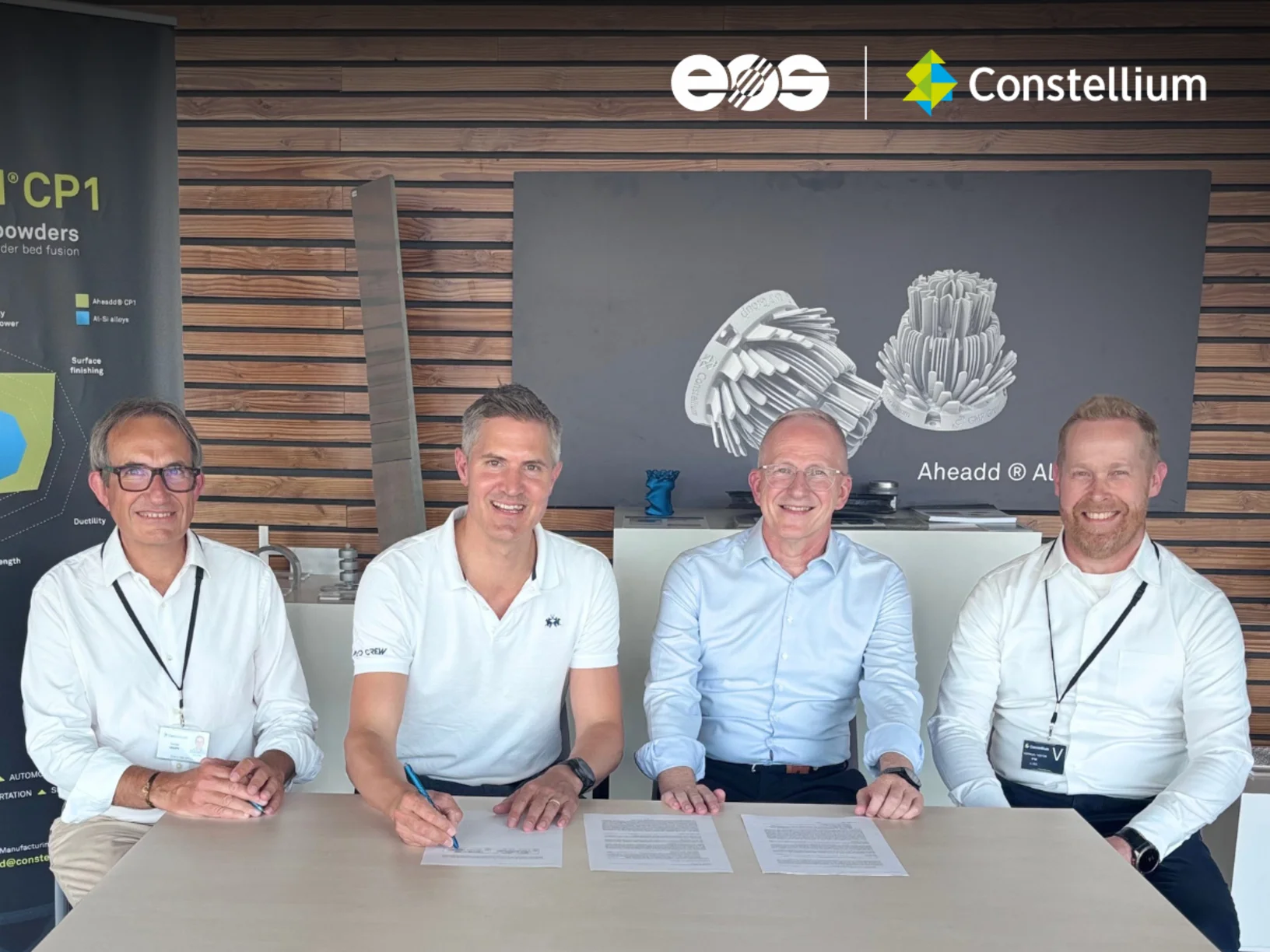
From Prototypes to Production: Validated Parameters Change the Economics
Most metal AM users do not struggle with design ideas; they struggle with qualification. Validating new 3D printing metal alloys from powder to finished part can consume months of machine time and engineering effort. EOS and Constellium are attacking that friction head-on. Users of EOS and AMCM laser powder bed fusion systems will now get access to CP1 and Al5X1 with validated process parameters, cutting material qualification time and risk. The two firms have already produced these validated parameters and back them with EOS’ Additive Minds team to help customers scale up production in these powders quickly. That combination of tuned parameters and specialist support turns aluminum additive manufacturing into a more predictable, schedulable process. Instead of heroic one-off projects, companies can plan for series production of heat exchangers, semiconductor heat sinks and wafers, and lightweight structural components under moderate load.
Designer Aluminiums and the Fight for High-Performance Applications
This deal is part of a broader shift toward “designer aluminiums” tailored for additive manufacturing rather than forced to mimic legacy wrought grades. CP1, in particular, has attracted interest for thermal management: industry and research programs have already evaluated it for heat exchanger and thermal management components. Its corrosion resistance, electrical and thermal conductivity, and suitability for anodizing and electrochemical polishing make it well suited to semiconductor heat sinks, wafer carriers, and parts that demand intensive surface finishing. Al5X1, on the other hand, keeps EOS in contention for aerospace components 3D printing and motorsport, where high strength, ductility, and anodization are essential. According to EOS CTO Joachim Zettler, “With EOS Aluminium Constellium CP1, EOS Aluminium Constellium Al5X1, and our partnership with Constellium, we are setting a new benchmark for aluminium in additive manufacturing.”
EOS’ Strategic Bet: Competing on Certified, Production-Ready Materials
The most important aspect of this partnership is strategic, not chemical. By pairing Constellium’s alloy development with EOS’ hardware and process work, the companies shorten the path from material invention to qualified production use. Instead of asking customers to tame a new powder alone, EOS can offer validated parameters, reference applications, and a clear route to certification. EOS Aluminium Constellium CP1 is scheduled for release in August 2026, underscoring that this is a roadmap play, not a one-off announcement. Both companies frame the agreement as the basis for a long-term framework to develop additional aluminum alloys for 3D printing, extending well beyond CP1 and Al5X1. In a market where machine builders must prove they are partners in production, not machine vendors, this is how EOS intends to compete: with aluminum additive manufacturing that is ready for aerospace, transportation, and industrial qualification on day one.