
What the Android 17 rollout race is really about
The Android 17 update rollout is the staggered process by which phone makers push Google’s latest operating system version to different models, often at different times and with uneven feature sets, creating a race where “stable” releases may arrive quickly but not always deliver the new Android 17 capabilities users expect.
The headline story is simple: Xiaomi is the first brand after Google to ship a stable Android 17 update to its phones. That sounds like a clear win in the rollout race, especially while stable Android 17 started rolling out to Pixels only last month and the list of devices receiving the update has not grown much since then. But the reality is more nuanced. Stable does not automatically mean feature-complete, and early adopters are finding that version numbers are racing ahead faster than real-world improvements. Xiaomi’s move highlights a growing divide between who can claim the Android 17 badge first and who is giving users the meaningful changes they care about. For most people, the question is less “who won?” and more “what do I get, and when?”.
Xiaomi’s Android 17 release: first to ship, light on substance
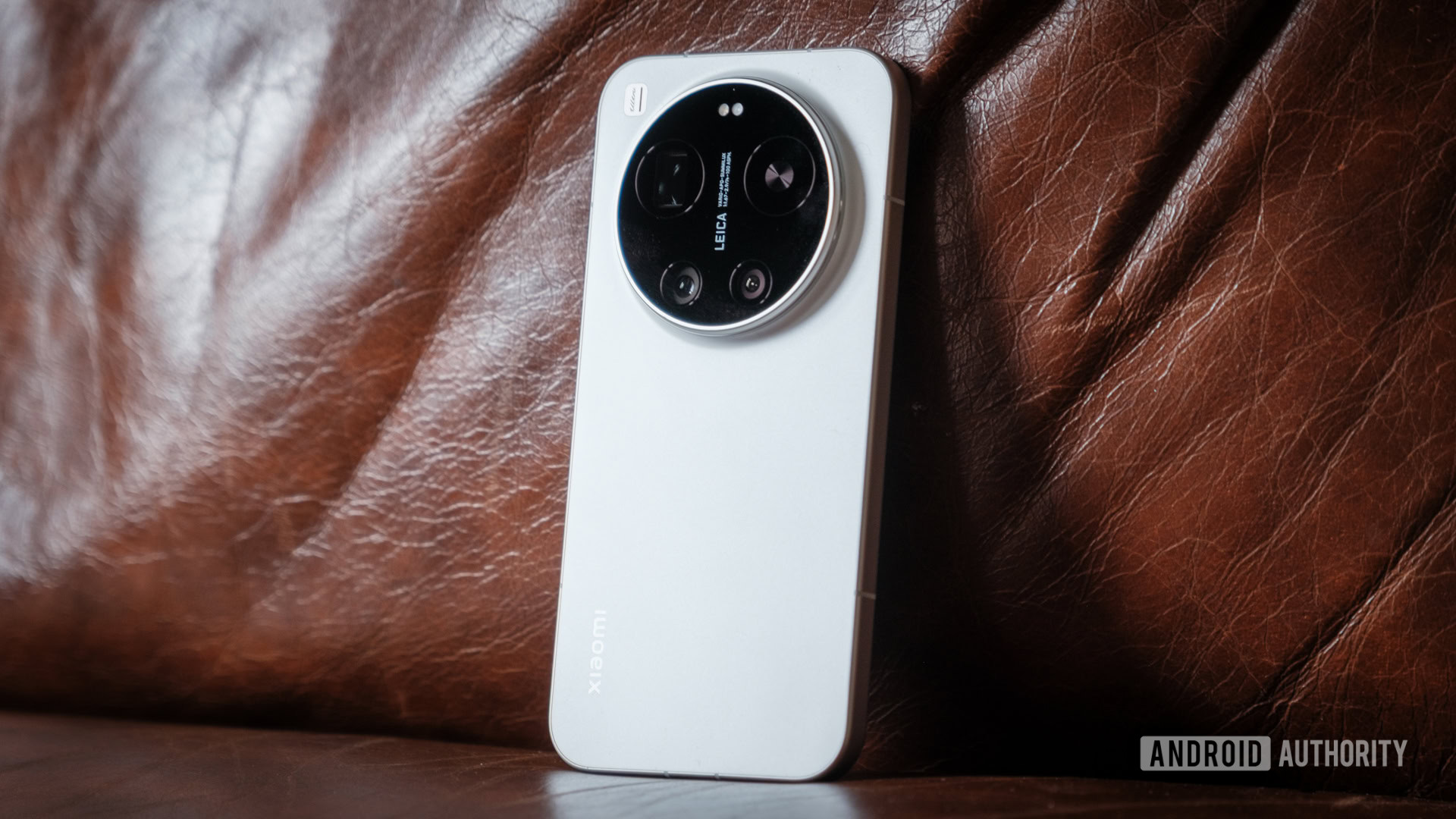
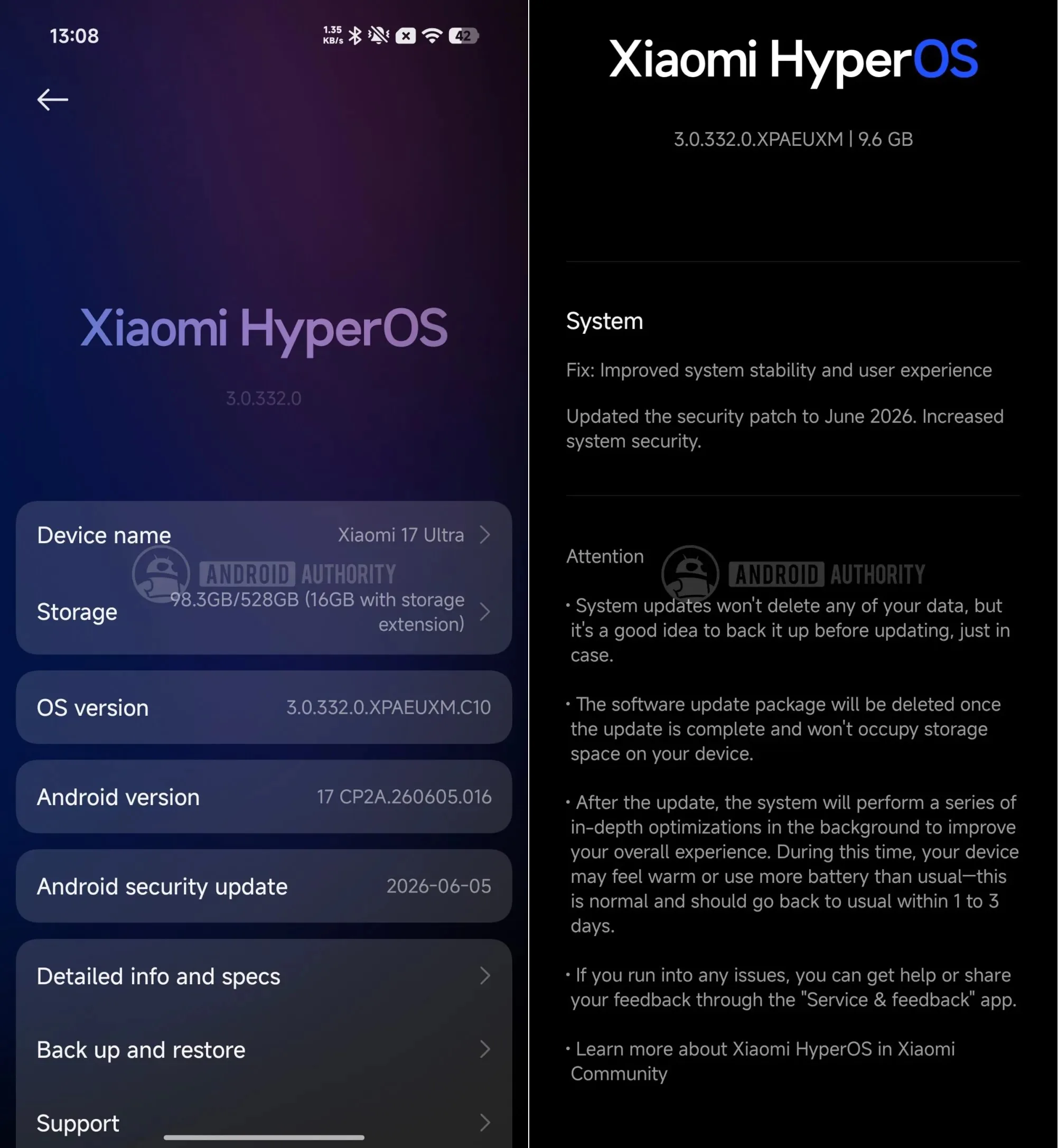
Xiaomi can legitimately claim bragging rights: it is the first non-Pixel phone maker to release a stable version of Android 17 on its phones. The rollout covers its latest flagships, the Xiaomi 17 and Xiaomi 17 Ultra, through new HyperOS 3 builds based on stable Android 17. These updates carry build numbers starting with 3.0.332 and are sizeable downloads, weighing about 10GB for the Xiaomi 17 Ultra and 8GB for the standard Xiaomi 17.
Yet when you look beyond the version label, the story becomes less impressive. The changelog focuses on the June security update and vague stability improvements, noting that this is “pretty much all that’s new, aside from the Android 17 Easter Egg”. Users only see the Android 17 version noted in the About Phone page after installing. According to one report, “this update feels like a security patch wearing a fancy new badge”. That framing is accurate: Xiaomi wins the marketing race, but owners of the Xiaomi 17 and 17 Ultra are not getting Android 17’s headline capabilities yet. In effect, Xiaomi has turned the rollout into a branding exercise more than a feature upgrade.
Why Android 17 features lag behind on early non-Pixel updates
Xiaomi’s approach exposes a key truth about modern Android: the version your phone reports and the features you experience are no longer tightly bound. Since Xiaomi’s HyperOS gets new features and updates independent of Android updates, the company can ship stable Android 17 without enabling the platform’s flagship additions. As a result, users on these early builds do not see key Android 17 features such as app bubbles, screen recording reactions, or separate volume controls for Gemini.
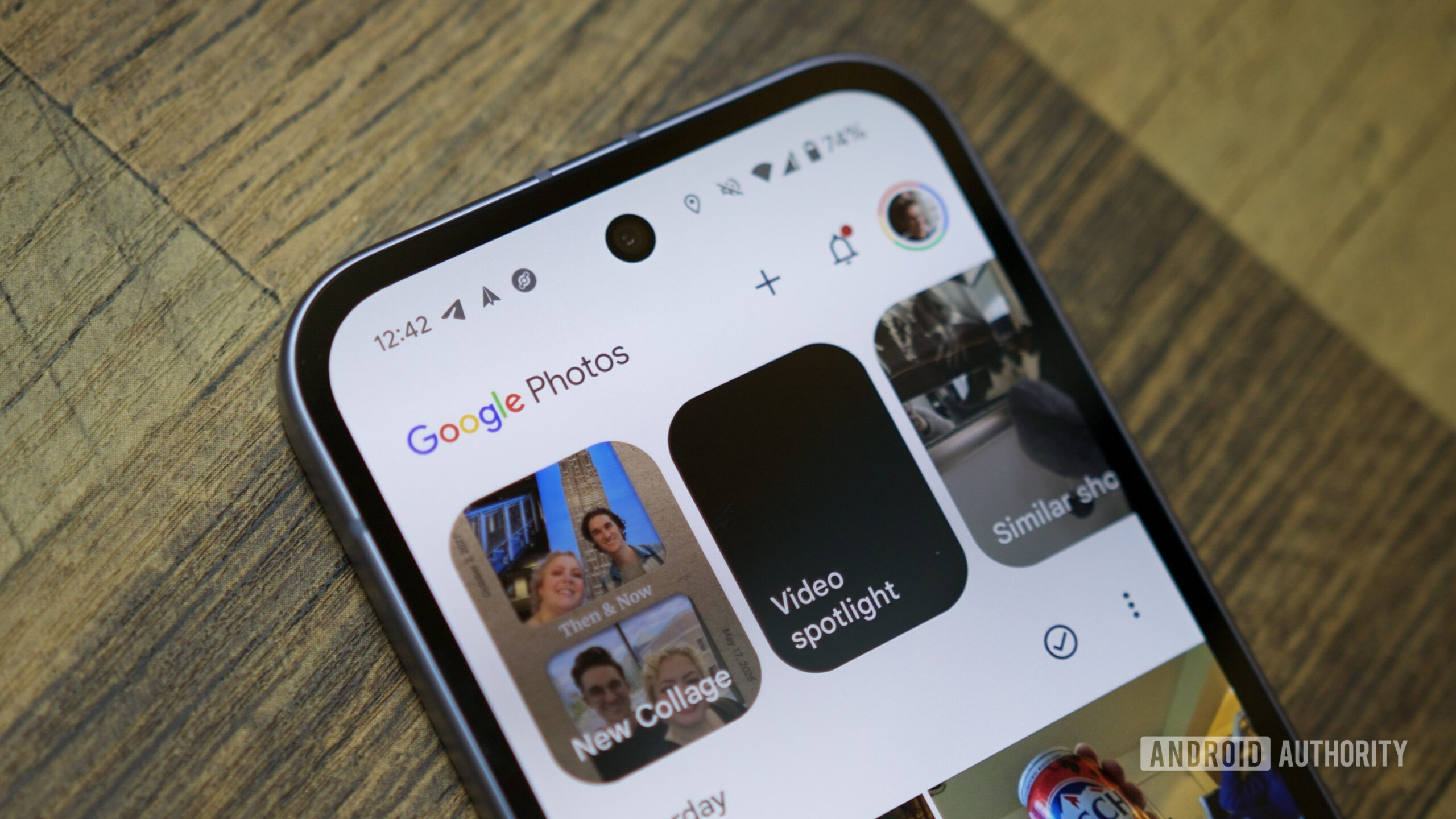
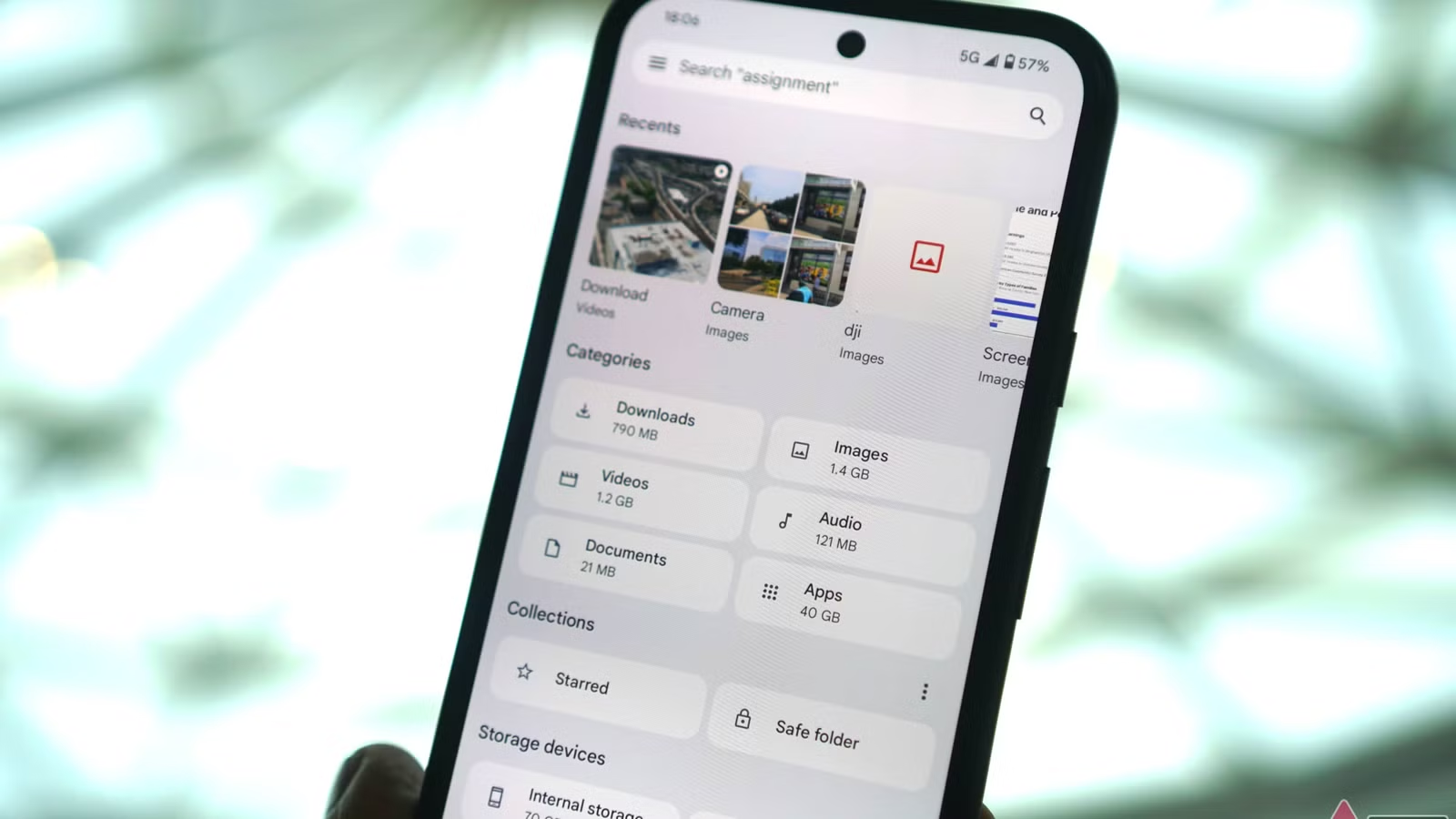
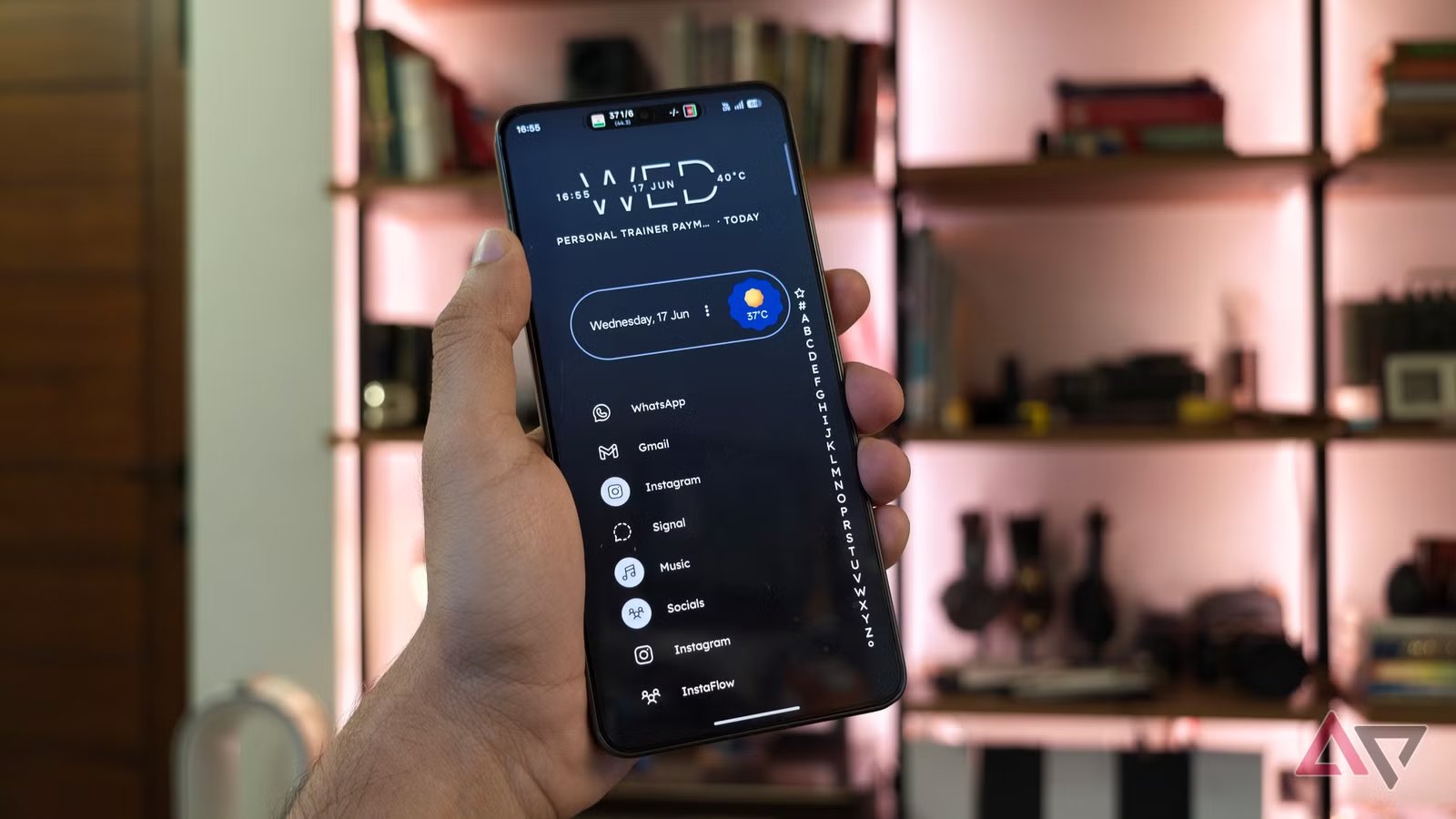
Meanwhile, Google’s own implementation of Android 17 is quietly refining the experience. Design-centric touches include the option to turn off app labels on the home screen, a tweak that helps declutter layouts and has been missing for quite a while. Settings menus are subtly tightened, and quick settings have separated Wi‑Fi and mobile data again into their own toggles. You can also customize the permanent search bar at the bottom of the home screen, adjusting transparency and adding a third icon, something that was previously limited to a separate widget. These are not flashy features, but they show that on Pixel hardware Android 17 is more than a new number, while on Xiaomi’s early rollout it largely is not.
Different brands, different timelines: why patience still matters
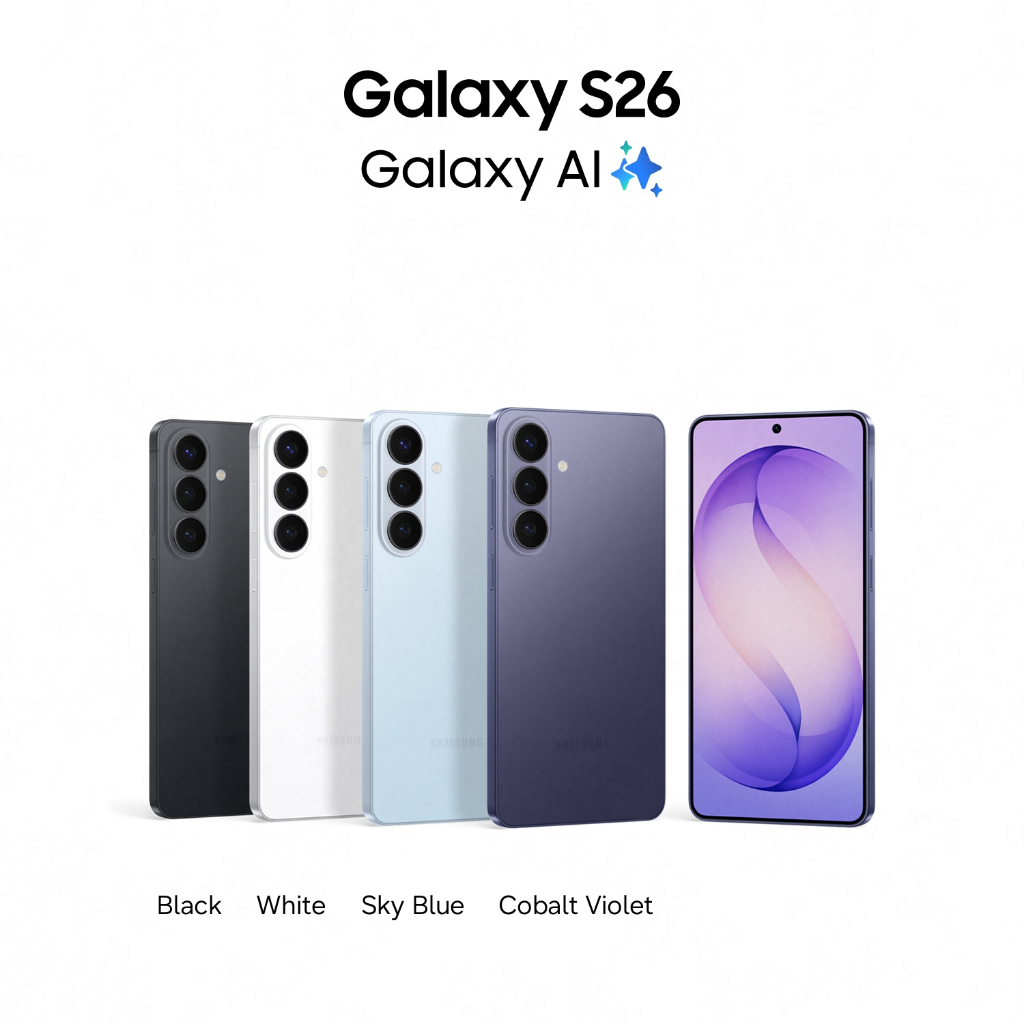
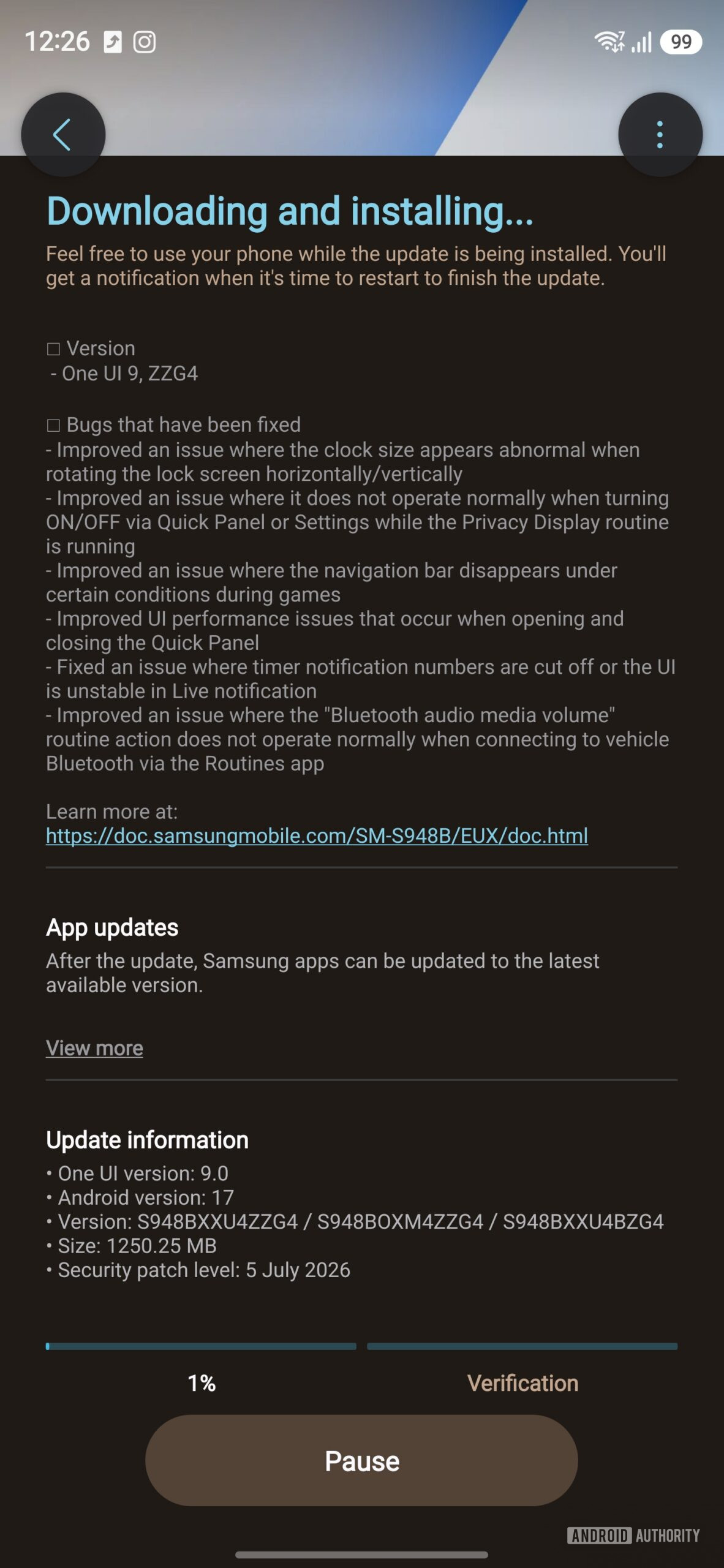
The wider phone update timeline makes Xiaomi’s move look bold but also slightly opportunistic. Android 17 rolled out to Pixel phones last month, and other brands are moving more cautiously. Samsung is still running its One UI 9 public beta, limited to the Galaxy S26, rather than pushing a stable Android 17 build to a broad audience. Most other manufacturers have not yet announced when their Android skins will adopt Android 17. In this context, Xiaomi’s decision to jump first with a feature-light stable build reads like a strategy to capture headlines while competitors work through longer testing cycles.
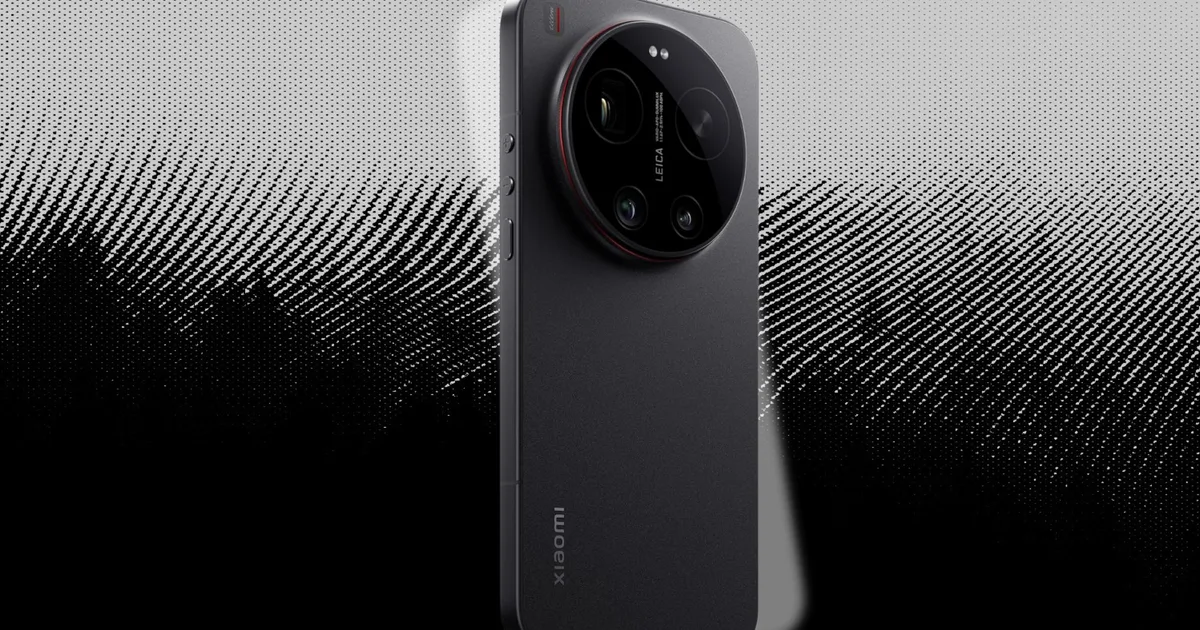
Even Xiaomi’s own rollout shows how fragmented things are. Among the Xiaomi 17 variants, only the standard Xiaomi 17 and the camera-focused Xiaomi 17 Ultra have received the stable update, with the Pro and Pro Max models excluded for now. Xiaomi’s last‑gen Xiaomi 15T Pro is seeing Android 17 through Mi Pilot test channels, but with a limited number of slots for testers. Across brands and even within a single lineup, Android 17 access depends heavily on device model and program status. For most users, that means patience is not optional; it is built into how Android updates work today.
Stable vs beta: how to read the fine print on your update
The most confusing part of the Android 17 update rollout is the gap between the terms “beta” and “stable” and what they mean in practice. On Samsung’s side, One UI 9 is still in public beta for the Galaxy S26, giving a limited audience early access to Android 17‑based software while the brand continues tuning its experience. Xiaomi, by contrast, is pushing stable Android 17 to retail devices, but because HyperOS handles most of its features independently of the underlying Android version, this stable build omits familiar platform additions like app bubbles, screen recording reactions, and separate Gemini volume sliders.
This split means users should be skeptical of version labels alone. A beta from one brand may offer more visible Android 17 features than a stable build from another. A stable Xiaomi update that feels like a security patch with an Android 17 badge is very different from Google’s own feature‑rich interpretation of the same version. When your phone prompts you to install an update, the smarter question is not “is this Android 17?” but “what does this update change for me?”. Until manufacturers align their feature sets with the platform version, the rollout race is more about marketing milestones than meaningful improvements.