
What “hidden” Android storage really is (and why your phone feels full)
Hidden Android storage refers to the caches, temporary files, offline downloads, backups, and “Other files” that do not appear in your gallery or main file manager but still take up gigabytes of internal space, slowing your phone and triggering low-storage warnings even when you avoid deleting photos, videos, or apps.
If your phone keeps nagging you about low space even after clearing screenshots and uninstalling a few apps, you are not alone. On many Samsung phones, the categories for images, videos, documents, and apps still do not add up to the “used storage” number you see in Device Care. That missing chunk often lives under vague labels like Other files, app cache, and old backups. The good news: this is the safest place to free up Android storage because you are removing clutter, not memories.
We will focus on what you can do with built-in tools in One UI and other Android skins, plus a couple of manual cleanups that typical Files apps ignore. Before you start, you need: your phone unlocked, access to Settings, a basic file manager, Google Maps installed if you use offline maps, and a few uninterrupted minutes. Think of this as spring cleaning, not a factory reset.
One ordered routine to recover phone storage space safely
This routine walks you through one realistic sequence you can repeat every few months. Follow the order to avoid missing easy wins or deleting the wrong thing.
- Open Settings, go to Device Care (or Device Maintenance) and tap Storage; note how much space is used and scroll to Show more to reveal the Other files bucket.
- Tap Trash, open Gallery inside it, check for anything worth keeping, then use the three-dot menu and choose Empty to remove all deleted photos and videos; repeat for the Trash in your Files app so the space is really freed.
- In the same Storage screen, tap Duplicate files, tap All so your phone selects duplicates, then tap Delete; remember these still sit in Trash until you empty it again.
- Tap Unused apps in Device Care’s Storage, look at apps you have not opened in 30 days, then uninstall ones you no longer need or choose Archive where available so the app is removed but its data stays for later restore.
- Tap App cache in the Storage section, tap All, and then Clear caches to wipe temporary data for every app at once; this clears space without touching logins or saved settings.
- Long-press any stubborn app icon, tap the “i” info button, go to Storage, and tap Clear cache if it still holds a big cache; do not press Clear data because that also wipes login data for that app.
- Open Google Maps, tap your profile picture, choose Offline maps, check every listed area, and delete maps you no longer need, since each offline area can be several hundred megabytes to over a gigabyte.
- Open your file manager, go to Internal storage > Android > media > com.whatsapp > WhatsApp > Databases, sort by date, and delete old database backups while keeping the newest file so WhatsApp can still restore your account if needed.
The big win here is that none of these steps require you to delete current photos, videos, or your main apps. One user found that the Other files category alone was holding more than 13GB of data, including duplicates, stuck transfers, and old WhatsApp databases. That is the kind of hidden clutter this sequence targets.
Why built-in storage tools miss things – and how to go deeper
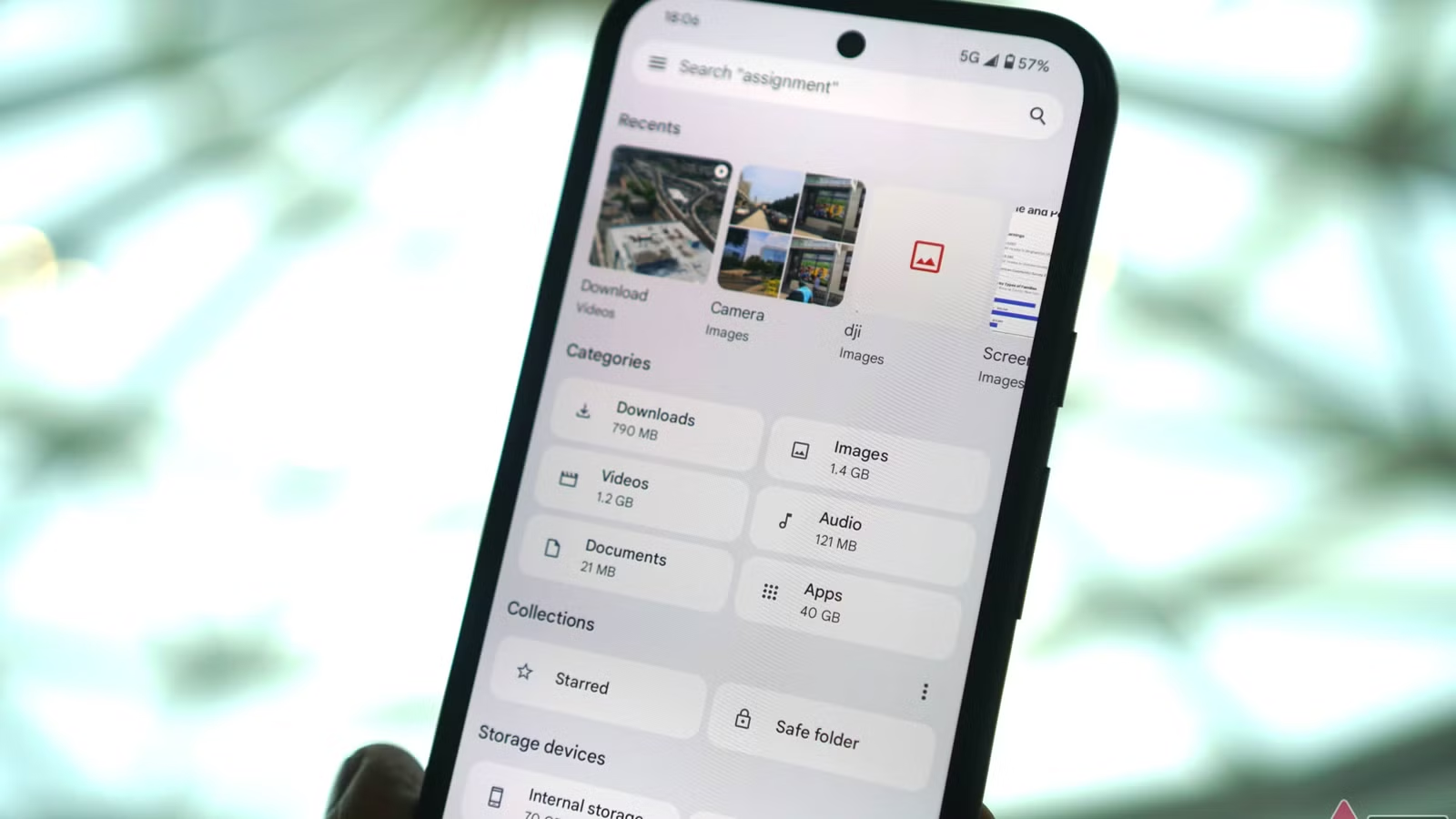
Many people rely only on the default Files app or the storage bar in Settings, but those tools often summarize storage instead of exposing every folder that wastes space. According to one report, the Files app did not show some of the junk that a deeper manual check uncovered in Other files, WhatsApp databases, and old downloads.
On some Android phones, tapping Other files only lets you browse what is inside, then you have to note names and remove items from their original apps or folders. It is tedious, which is why large chunks of wasted space survive regular cleanups. A third-party file manager like Files by Google helps because it can scan and clear junk files directly, instead of forcing you to hunt them down manually.
The gotcha: do not rush when cleaning up app-specific folders. For WhatsApp, for example, you sort the Databases folder by date, keep the newest backup, and only delete older ones, because the most recent file is what WhatsApp uses to restore your chats if you switch phones. One careless tap can cost you conversation history.
Clearing cache on Android safely (without breaking apps)
App cache is temporary data that helps apps load images, timelines, or maps faster, but over time it quietly grows and eats storage. Clearing it is one of the easiest ways to free up Android storage when your phone feels bloated.
On Samsung phones, One UI offers a rare bonus: you can wipe every app’s cache from a single screen instead of visiting them one by one. From Settings, go to Device Care, then Storage, then App cache; tap All and Clear caches to remove temporary files across the board. Clearing the cache on your Android phone will not delete personal data, logins, or settings; it only removes temporary files.
If you want to target a single heavy app, long-press its icon, tap the info “i” button, open Storage, and tap Clear cache. The key mistake to avoid is tapping Clear data in the same screen; that option erases the app’s stored data, including login information. Think of Clear cache as taking out the trash, while Clear data is more like reinstalling the app.
Is this storage routine worth it?
For many users, the answer is yes because reclaiming several gigabytes can keep a phone running smoothly without losing anything important. One person found that Other files alone held over 13GB of data, and another reported getting back 22GB on a Samsung phone using One UI tools without deleting any critical content.
Running out of storage does more than prevent new photos; it can also slow down your device. Treat this routine like an occasional tune-up: empty Trash, remove duplicates and unused apps, clear caches, delete outdated offline maps, and trim old backups. Pay close attention around WhatsApp databases and Clear data buttons, and always check Trash before emptying. If you stick to those safeguards, you will recover phone storage space from system bloat and cached data, while your photos, videos, and daily apps stay right where you want them.